Quick Summary
Selling a 100+ unit apartment complex works nothing like selling a single-family house — value is driven by net operating income and prevailing cap rates rather than comparable sales, the buyer pool is institutional (REITs, private equity, syndicators), and due diligence runs deep into rent rolls, trailing financials, and physical condition reports. Existing financing (especially a loan with defeasance or yield maintenance provisions) can meaningfully affect net proceeds and timing. Owners who want to skip the months-long broker-marketing process can also sell directly for cash, trading some top-line price for speed and certainty.
In This Article
- Why This Isn’t Like Selling a House
- How Value Actually Gets Calculated
- Who Actually Buys a 100+ Unit Property
- The Due Diligence Buyers Expect
- Existing Financing Can Make or Break the Deal
- How Deferred Maintenance Affects Your Offer
- Broker-Listed Sale vs. a Direct Sale
- A Realistic Timeline
- Tax Considerations Worth Raising With a Professional
- Mistakes Owners Make Selling Large Multifamily
- A Quick Example
- Frequently Asked Questions
- How Cornerstone Property Buyers Can Help
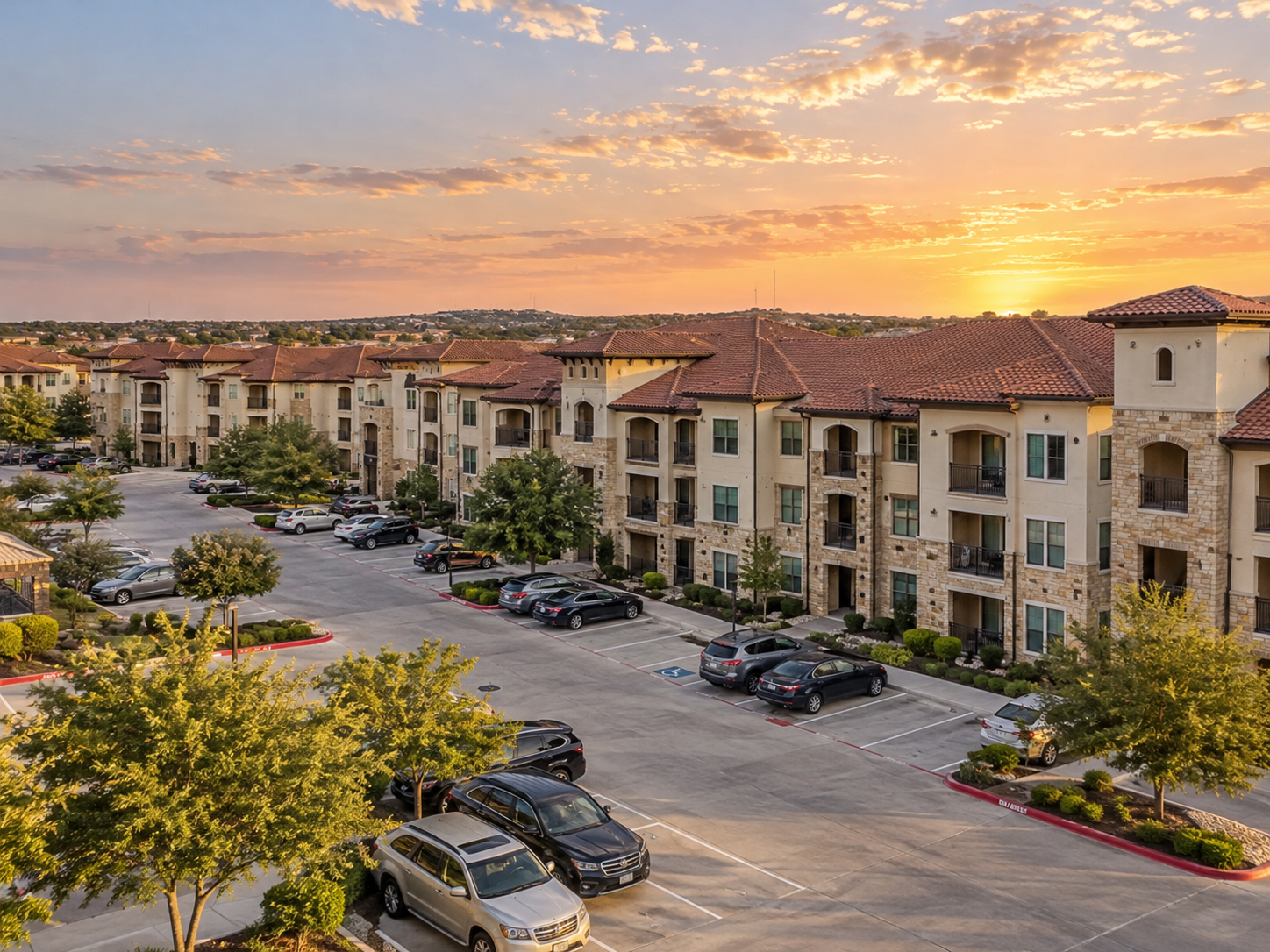
Owning a 100+ unit apartment complex in San Antonio and deciding to sell puts you in a very different market than a homeowner listing a single-family house. The buyers, the valuation method, the paperwork, and the financing considerations are all fundamentally different, and treating this like a residential sale — or trusting a residential-focused agent to handle it — can leave real money on the table. This guide walks through how an institutional-grade multifamily sale actually works.
Why This Isn’t Like Selling a House
A single-family home’s value is driven largely by what comparable homes nearby have recently sold for. A 100+ unit apartment complex is valued as an income-producing business — the physical building matters, but what actually drives the price is the cash flow it generates and how that cash flow compares to what similar income-producing properties are trading for in the current market. This difference changes everything about how the sale process works, from who the realistic buyers are to what documentation they’ll expect before making an offer.
How Value Actually Gets Calculated
The standard approach for valuing an income property like this is the income approach, built around Net Operating Income (NOI) — essentially, the property’s total rental and other income minus operating expenses (not including debt service). That NOI figure is then divided by a “cap rate” (capitalization rate) that reflects what investors in the current market are willing to accept as a return for a property of this type, size, and location, producing an estimated value: Value = NOI ÷ Cap Rate.
Cap rates move with broader market conditions (interest rates, investor demand, perceived risk) and vary by submarket and property class within San Antonio itself, so a rate that applied even a year or two ago isn’t necessarily still accurate. Getting a current, well-supported cap rate from a commercial broker or appraiser familiar with multifamily transactions in your specific submarket is essential to understanding what your property is actually worth right now, rather than relying on a number from an old appraisal or a general market article.
Who Actually Buys a 100+ Unit Property
The buyer pool for a property this size is almost entirely institutional or professional, not individual homebuyers. Common buyer types include real estate investment trusts (REITs), private equity real estate funds, multifamily syndicators who pool capital from individual investors to acquire larger properties, and experienced private multifamily investors with existing portfolios. Many of these buyers are also looking for a 1031 exchange opportunity — rolling proceeds from a previously sold property into this one to defer capital gains tax — which can affect their timeline and how motivated they are to move quickly on a specific deal.
Because this buyer pool is sophisticated and well-capitalized, they generally underwrite deals rigorously and have specific expectations around documentation and due diligence — expectations that differ substantially from what a residential buyer would ask for.
The Due Diligence Buyers Expect
A serious institutional buyer will typically want a current rent roll (every unit, its lease terms, rent amount, and occupancy status), trailing twelve-month (T-12) and often trailing three-month (T-3) financial statements showing actual income and operating expenses, and copies of all leases. They’ll also generally want a Property Condition Assessment (PCA) evaluating the physical condition of the buildings and systems, and often a Phase I Environmental Site Assessment, particularly for older properties or those with any history that could raise environmental concerns.
Having this documentation organized and ready before going to market — rather than scrambling to produce it once a buyer requests it — can meaningfully speed up the process and signals to sophisticated buyers that the property has been professionally managed, which can itself support a stronger valuation.
Existing Financing Can Make or Break the Deal
If the property currently has a commercial mortgage, the specific terms of that loan matter enormously to how a sale actually plays out. Some commercial loans are assumable, meaning a qualified buyer can take over the existing loan under its current terms (which can be a selling point if the existing rate is favorable compared to current market rates). Many commercial loans, however, carry defeasance or yield maintenance provisions — prepayment penalty structures that can be substantial, sometimes significant enough to materially affect net proceeds if the loan is paid off before its term is up.
Understanding exactly what your existing loan requires if paid off early — and factoring that cost into your actual net proceeds expectation — is something to work through directly with your lender and a commercial real estate attorney or advisor before going to market, since this can be one of the largest and most underestimated costs in a commercial property sale.
How Deferred Maintenance Affects Your Offer
Unaddressed capital needs — an aging roof across multiple buildings, outdated HVAC systems, deferred parking lot or plumbing work — get factored directly into a buyer’s offer, since sophisticated buyers budget for near-term capital expenditures as part of their underwriting. A Property Condition Assessment will typically surface these issues explicitly, and buyers will generally price in the cost of addressing them rather than simply trusting a seller’s representation that everything is in good shape.
This cuts both ways: addressing major deferred maintenance before going to market can support a stronger price, but it also costs real money and time upfront, which isn’t always the right call depending on your timeline and how much capital you’re willing to put into the property before selling.
Broker-Listed Sale vs. a Direct Sale
A traditional broker-marketed sale — listing with a commercial real estate brokerage that specializes in multifamily, running a formal marketing process, and soliciting offers from the buyer pool described above — is the standard path for properties of this size and can produce the strongest possible price, since it creates competition among multiple sophisticated buyers. It also typically takes longer, involves commission costs, and depends on broader market conditions (buyer appetite, available financing, interest rates) that are outside the seller’s control.
A direct sale to a company like Cornerstone Property Buyers skips the marketing period and the extended due diligence and financing contingencies a traditional institutional buyer brings, trading some top-line price for a faster, more certain close — a tradeoff that can make sense for an owner who wants to exit on a specific timeline, is managing burnout from operating the property, or simply wants certainty over maximizing the last percentage point of sale price.
A Realistic Timeline
A broker-marketed institutional sale of a property this size commonly takes several months from listing to closing — time for marketing, buyer underwriting, due diligence, and financing to come together, even when everything proceeds smoothly. Delays can come from financing timelines on the buyer’s side, issues surfacing during due diligence, or negotiations around price adjustments based on what the PCA or financial review reveals.
A direct cash sale compresses this considerably, since there’s no external financing to arrange and no competitive marketing period — though the tradeoff, as discussed above, is typically a lower price than what a fully marketed sale to a leveraged institutional buyer might produce.
Tax Considerations Worth Raising With a Professional
A sale of this size typically involves substantial capital gains, and depreciation recapture (tax owed on previously claimed depreciation deductions) is a specific consideration for income-producing real estate that doesn’t apply the same way to a primary residence sale. Many sellers of large multifamily properties use a 1031 exchange to defer capital gains tax by rolling proceeds into a replacement property, though this comes with strict timing requirements and specific rules that need to be understood well before closing, not figured out afterward.
This is genuinely complex, transaction-specific tax territory — a commercial real estate tax professional should be involved early in the process, ideally before you’ve committed to a specific sale structure or timeline, since some tax-advantaged strategies require decisions made well in advance of closing.
Mistakes Owners Make Selling Large Multifamily
A common mistake is relying on an outdated valuation or a cap rate that no longer reflects current market conditions, leading to a list price that’s either unrealistic or leaves value on the table. Another is going to market without organized financial and property documentation ready, which slows down serious buyers and can make the property look less professionally managed than it actually is. A third is failing to understand the specific payoff cost of existing financing (particularly defeasance or yield maintenance provisions) before committing to a sale timeline, only to discover the net proceeds are meaningfully lower than expected once the loan payoff is calculated.
A fourth mistake is assuming a residential real estate agent, without specific multifamily/commercial transaction experience, can effectively market and negotiate a sale of this complexity — this is specialized work that benefits from someone who regularly transacts in this specific asset class.
A Quick Example
Say an owner of a 120-unit complex wants to sell and has a loan with a defeasance provision that would cost a substantial amount to pay off early. Working with a commercial broker, they get a current valuation based on an updated cap rate and NOI, confirm the exact defeasance cost with their lender, and decide the net proceeds still make a traditional marketed sale worthwhile — accepting the months-long process in exchange for the stronger gross price a competitive marketing process is likely to produce.
Now say a different owner of a similar-sized property is managing significant deferred maintenance, doesn’t want to invest further capital into repairs, and is more focused on exiting the business quickly than maximizing the last few percentage points of sale price. For that owner, a direct cash sale — skipping the marketing period, PCA-driven repair negotiations, and buyer financing contingencies — may be the better fit, even at a lower gross price, because it gets them to a closed, funded transaction on a predictable timeline.
Frequently Asked Questions
How is a 100+ unit apartment complex valued?
Primarily through the income approach — Net Operating Income divided by a market-appropriate capitalization rate — rather than comparable sales, which is the standard method for single-family homes.
Who are the realistic buyers for a property this size?
Institutional and professional investors: REITs, private equity real estate funds, multifamily syndicators, and experienced private investors, many of whom may also be executing a 1031 exchange.
What documentation should I have ready before going to market?
A current rent roll, trailing financial statements (T-12 and often T-3), copies of leases, and ideally a recent or updated Property Condition Assessment and environmental report, since serious buyers will request all of this during due diligence.
Can I sell if my existing loan isn’t due yet?
Often yes, but the loan’s specific terms matter — some loans are assumable, while others carry prepayment penalties (defeasance or yield maintenance) that can be substantial. Confirm the exact payoff cost with your lender before committing to a sale timeline.
Does deferred maintenance always hurt my sale price?
It typically factors into a sophisticated buyer’s offer, since they’ll budget for the cost of addressing it — whether that’s better addressed before selling or simply priced into the offer depends on your specific timeline and how much capital you want to invest before exiting.
How long does a sale like this typically take?
A traditional broker-marketed sale commonly takes several months from listing to closing; a direct cash sale can close considerably faster since there’s no external buyer financing or competitive marketing period involved.
Is a direct cash sale always a lower price than a broker-marketed sale?
Generally yes, since a direct sale trades some top-line price for speed and certainty — but whether that tradeoff makes sense depends on your specific priorities, timeline, and how much the property’s condition or your own capacity to manage a lengthy process factor in.
What tax considerations should I be aware of?
Capital gains and depreciation recapture are standard considerations for a sale this size, and many sellers use a 1031 exchange to defer gains — but these require careful, transaction-specific planning with a tax professional well before closing.
Should I use a residential agent or a commercial broker?
A commercial broker with specific multifamily transaction experience is strongly recommended for a property this size — the valuation method, buyer pool, and negotiation dynamics are different enough from residential sales that specialized experience matters.
What happens to current tenants when a property like this sells?
Existing leases typically transfer with the property regardless of who owns it — a sale doesn’t automatically terminate tenant leases, and the new owner generally steps into the landlord role subject to those existing lease terms.
Can I sell just part of a larger portfolio, or does it have to be the whole property?
A single 100+ unit property can be sold on its own, though if you own multiple properties, some buyers may be interested in a portfolio purchase instead. Either approach is possible — it depends on what you’re trying to accomplish and what the market and specific buyers are interested in.
How Cornerstone Property Buyers Can Help
If a faster, more certain exit fits your priorities better than the months-long marketing process a traditional institutional sale requires, Cornerstone Property Buyers can provide a no-obligation cash offer on your 100+ unit property, with the deferred maintenance and existing financing already factored into our evaluation. Learn more about our commercial property buying process or see how we buy houses.
This article isn’t legal or financial advice; consult a commercial real estate attorney or lender about your specific situation, particularly regarding existing financing and tax implications.
Get a fair cash offer in 24 hours — no repairs, no fees, no obligation.
Get My Cash Offer → Or call: 210-920-7915